The Resilient305 Collaborative (R305C) builds on the framework of the Resilient305 Strategy to combine interdisciplinary research from the area’s leading institutions with actionable community initiatives and community-driven solutions.
Learn More
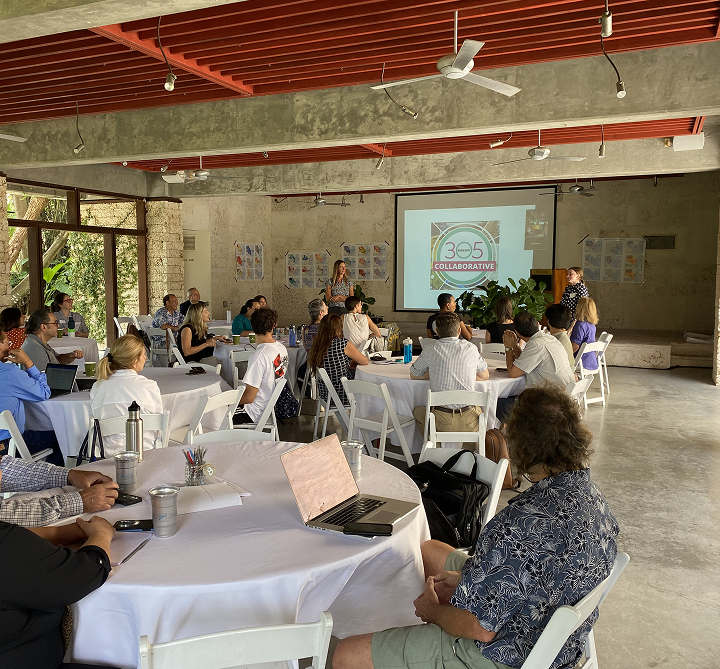
Our work centers on researching the ways climate change impacts quality of life for Miami-Dade residents. Called “Resilience Research," this innovative process combines academic expertise with community priorities to co-design studies that directly address community concerns.
Our resilience strategy relies on co-designing research with community members and government staff to track and evaluate resilience outcomes. This “Resilience Research” produces actionable data and informs resilience strategies.
The Resilience Learning System is a framework where community organizations and government agencies work directly with academic researchers to study climate impacts and develop solutions grounded in community priorities.
Through this co-design and co-production model, partners are involved at every stage, from deciding which questions to ask and where to conduct fieldwork to reporting findings back to residents and determining what actions should follow. As communities experience changes in climate impacts, their evolving priorities are fed back into the research process, updating the questions researchers ask and how resilience is measured.This makes the system dynamic: continuously learning and adapting alongside the communities it serves.
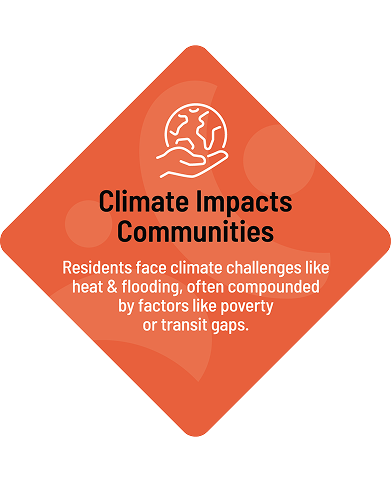
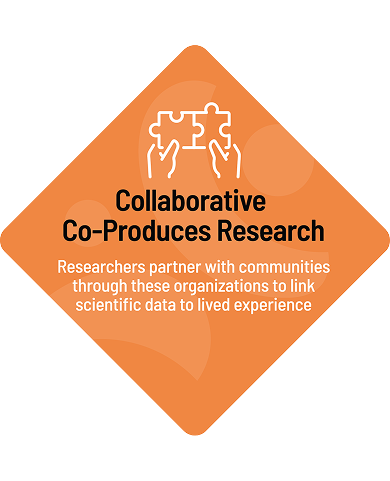
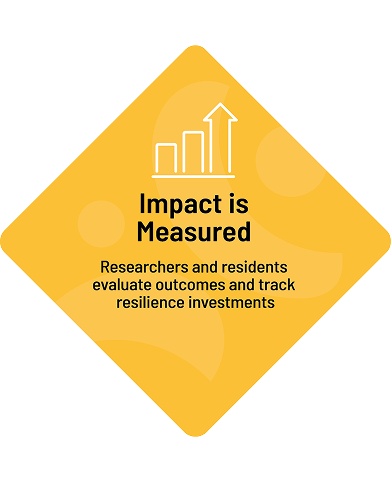
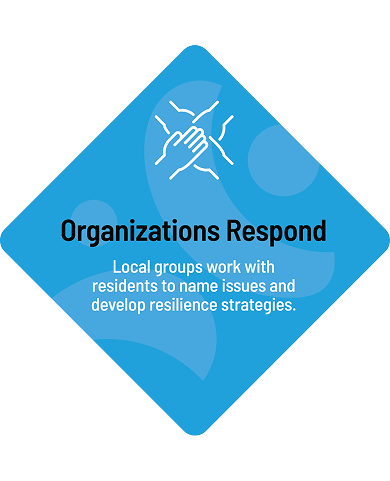
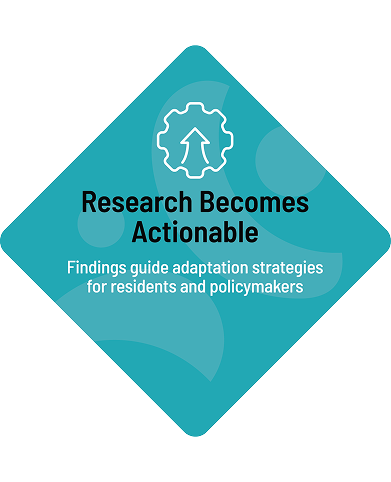
The results are actionable resilience strategies that are also a feedback loop: as communities experience changes in climate impacts, their evolving priorities are fed back into the research process, updating the questions researchers ask and how resilience is measured. This makes the system dynamic — continuously learning and adapting alongside the communities it serves.
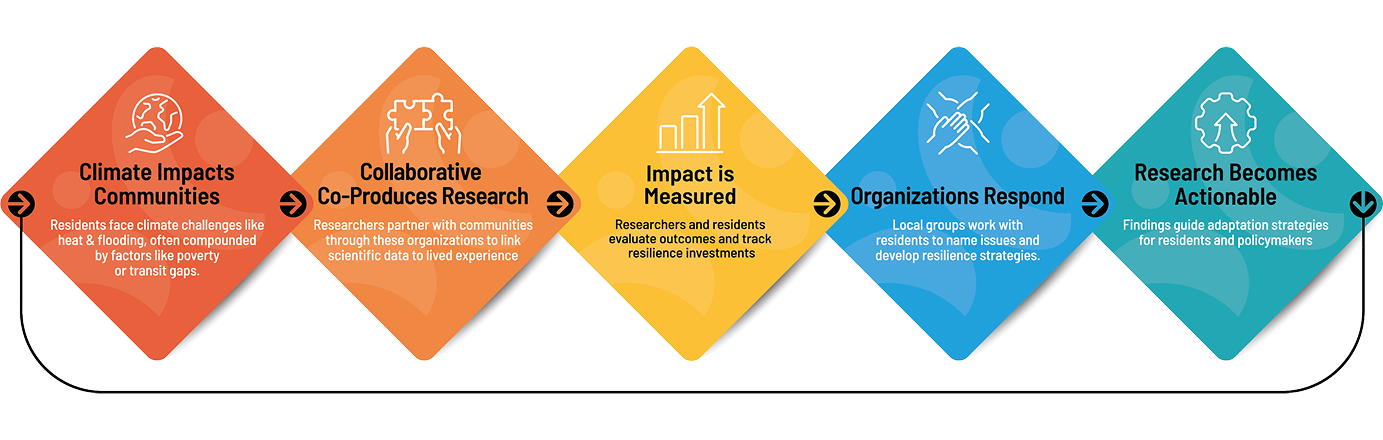
The results are actionable resilience strategies that are also a feedback loop: as communities experience changes in climate impacts, their evolving priorities are fed back into the research process, updating the questions researchers ask and how resilience is measured. This makes the system dynamic — continuously learning and adapting alongside the communities it serves.





Resilience Dividends
Barriers & Innovations
Capacity Building & Workforce Development
Dynamic Adaptive Management
FEMA Recovery Support Functions


.png)

.png)
.png)
.png)